USB devices repeatedly disconnect after idle or sleep
What to do first
USB devices repeatedly disconnect after idle or sleep. USB hub power management, selective suspend, cable or power limitations, or a device driver may be involved. Record the current state before changing it, use only the supported Windows path described below, and verify the same operation again after any required restart.
This is a general troubleshooting guide, not an announcement of a current outage.
Affected products and symptoms
- Product
- Windows USB power management
- Versions and conditions
- Windows 11 (confirm the edition and hardware requirements for the feature)
- Error codes and identifiers
- Code 43
Symptoms
- USB devices repeatedly disconnect after idle or sleep.
- The same condition can persist after a retry or restart.
Causes and conditions
USB hub power management, selective suspend, cable or power limitations, or a device driver may be involved.
Before you start
- Save open documents and allow time for a Windows restart if required.
- Run administrative actions only on a personally managed PC or with administrator approval.
- Save the diagnostic command output so the before and after states can be compared.
Precautions
- Do not bulk-delete registry entries, system folders, credentials, or storage metadata.
- Do not run unofficial scripts or unknown drivers with administrator rights.
- Microsoft recommends that USB selective suspend normally remain enabled. Check the cable, power supply, and manufacturer-provided drivers first, and limit power-management changes to a temporary comparison on the affected device.
Step-by-step instructions
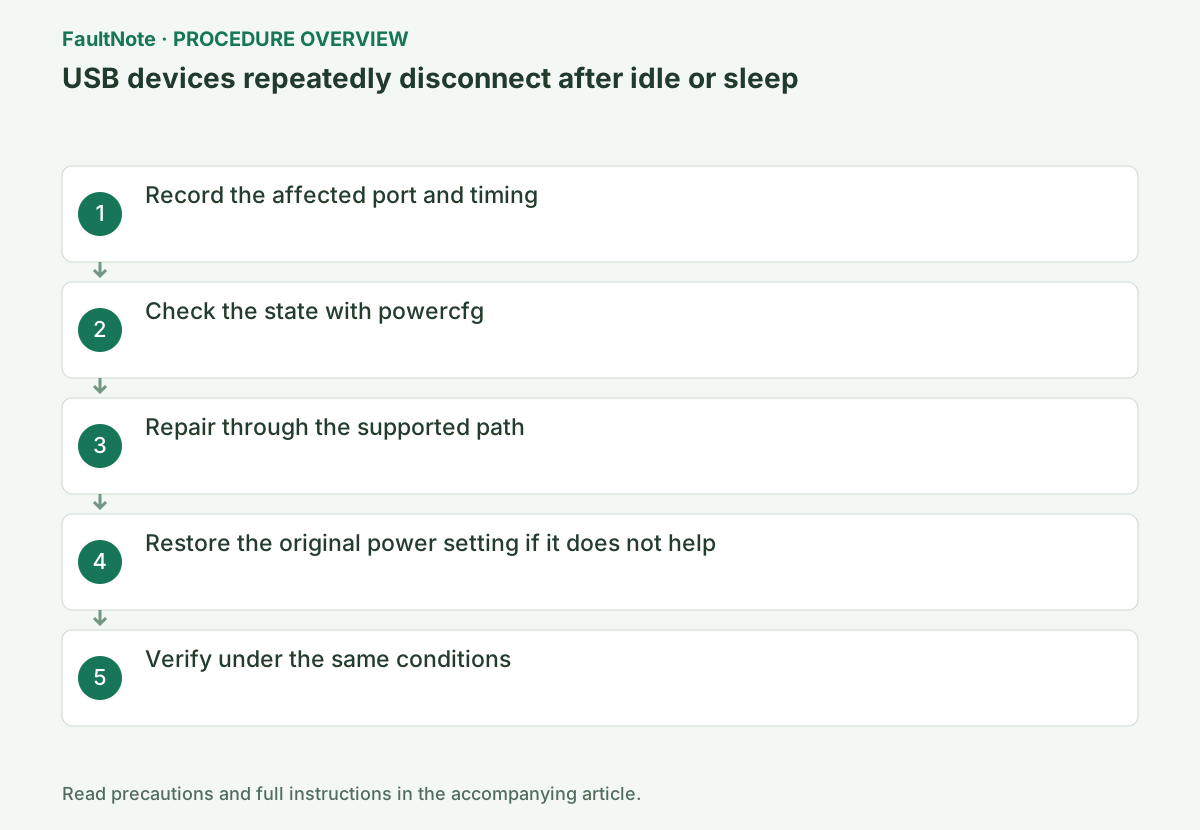
Distinguish disconnects after idle, after waking, and after moving the cable. Back up external storage and stop writes before comparing hub and direct PC connections. If replacing the cable fixes the issue, leave power settings unchanged.
Compare the same device on another port, another cable, and a powered hub; safely eject important USB storage before testing.
powercfg /energyIn Device Manager > Universal Serial Bus controllers, inspect the target hub's Power Management tab. Microsoft recommends leaving selective suspend enabled; change automatic power-off only as a temporary diagnostic comparison and restore it if there is no improvement.
Some hubs do not expose a Power Management tab. Do not force it through registry edits; check the PC manufacturer’s USB or chipset drivers instead. If you can change the setting, compare over the same idle period and restore the original checkbox state if it does not help.
Run Get-PnpDevice -PresentOnly | Where-Object Class -eq USB and repeat the original operation once under the same conditions. If it succeeds, verify again after a restart and record the setting that changed.
Check that no new critical event with the same timestamp and component appears in Event Viewer.
Get-PnpDevice -PresentOnly | Where-Object Class -eq USB
Check the result
- The feature starts, connects, or completes without the original error.
- The verification command reports the expected enabled, healthy, or connected state.
- The result remains correct after a Windows restart and no new matching critical event appears.
If the problem continues
- If the same code persists, provide the full message, Windows build, command output, and occurrence time to the PC administrator or Microsoft Support.
- If hardware requirements, organization policy, or server settings are responsible, ask the owner to make the change instead of bypassing it on the client.
Scope of this guide
Troubleshooting guide — Restore the feature so it starts, connects, or completes normally and passes the same verification after a Windows restart.
Frequently asked questions
Should selective suspend stay disabled permanently?
Use the change only on the target hub for diagnosis. Restore it if unrelated because battery life and other USB devices can be affected.
Is it safe to test with USB storage?
Back up first; a disconnect during writes can corrupt data. Safely remove the drive before changing ports or cables.
Official sources and dates
Source publication or resolution date: Not specified. Sources checked: 2026-09-05. The check date is not the date the problem first occurred. Interface labels can vary between versions and display languages.
Related troubleshooting guides
- WSL 2 error 0x80370102 prevents a distribution from starting
- Restore the WSL optional component when error 0x8007019e appears
- WSL alone cannot resolve names while a VPN is connected
- Hyper-V is missing from Windows Features or cannot be enabled
- WSL 2 or Hyper-V cannot run inside a Hyper-V virtual machine
- Windows Sandbox is missing or cannot start