Hibernate is missing from the power menu
What to do first
Hibernate is missing from the power menu. Hibernation may be disabled, free space may be insufficient for hiberfil.sys, or firmware/drivers may restrict available sleep states. Record the current state before changing it, use only the supported Windows path described below, and verify the same operation again after any required restart.
This is a general troubleshooting guide, not an announcement of a current outage.
Affected products and symptoms
- Product
- Windows power management
- Versions and conditions
- Windows 11 (confirm the edition and hardware requirements for the feature)
- Error codes and identifiers
- powercfg
Symptoms
- Hibernate is missing from the power menu.
- The same condition can persist after a retry or restart.
Causes and conditions
Hibernation may be disabled, free space may be insufficient for hiberfil.sys, or firmware/drivers may restrict available sleep states.
Before you start
- Save open documents and allow time for a Windows restart if required.
- Run administrative actions only on a personally managed PC or with administrator approval.
- Save the diagnostic command output so the before and after states can be compared.
Precautions
- Do not bulk-delete registry entries, system folders, credentials, or storage metadata.
- Do not run unofficial scripts or unknown drivers with administrator rights.
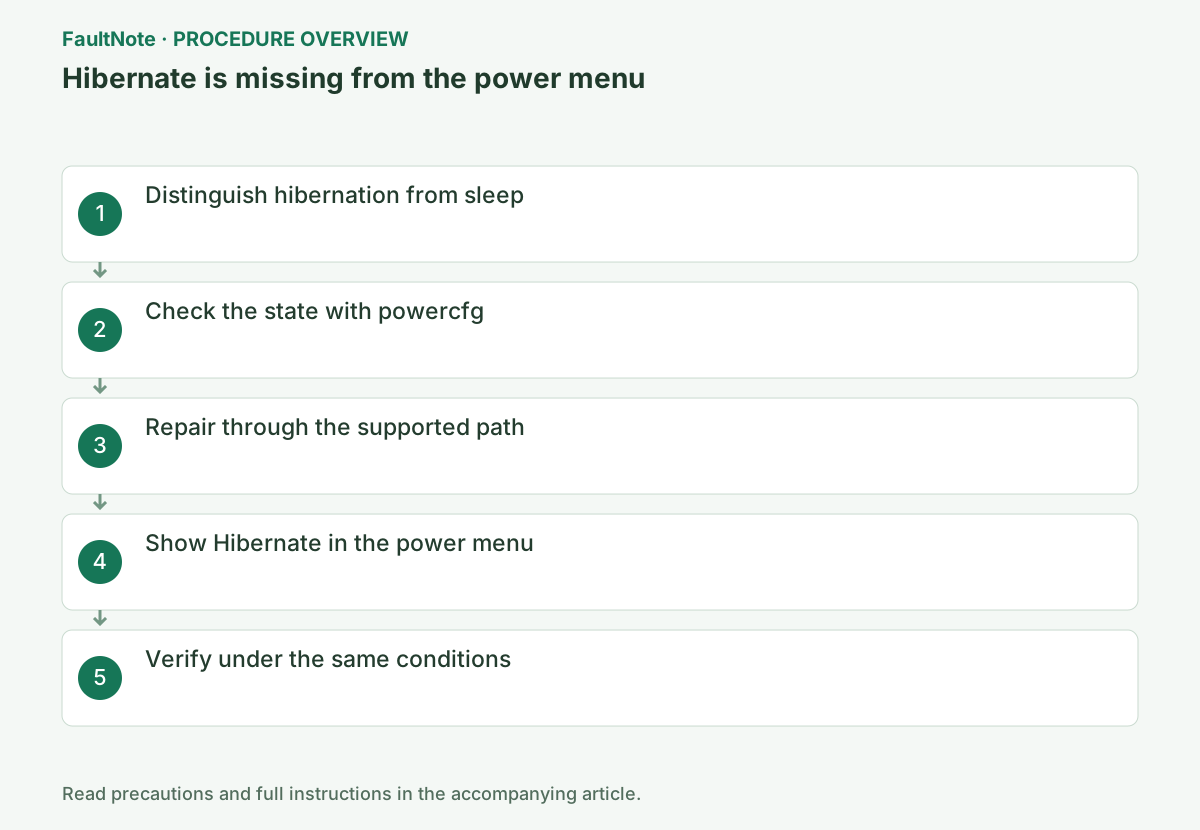
Step-by-step instructions
Hibernation saves memory contents to the system drive before powering down. Separate a hidden Start > Power entry from a state reported as unavailable by powercfg. Check free space on the system drive as well.
In an elevated terminal, check the available sleep states and the reason hibernation is unavailable.
powercfg /aIf hibernation is merely disabled, enable it with powercfg, then open Control Panel > Power Options > Choose what the power buttons do and make Hibernate visible.
powercfg /hibernate onUnder Choose what the power buttons do, select Change settings that are currently unavailable, enable Hibernate under Shutdown settings and save. If powercfg /a reports a hardware or other restriction, repeatedly changing the menu setting will not resolve it.
Run powercfg /a and repeat the original operation once under the same conditions. If it succeeds, verify again after a restart and record the setting that changed.
Check that no new critical event with the same timestamp and component appears in Event Viewer.
powercfg /a
Check the result
- The feature starts, connects, or completes without the original error.
- The verification command reports the expected enabled, healthy, or connected state.
- The result remains correct after a Windows restart and no new matching critical event appears.
If the problem continues
- If the same code persists, provide the full message, Windows build, command output, and occurrence time to the PC administrator or Microsoft Support.
- If hardware requirements, organization policy, or server settings are responsible, ask the owner to make the change instead of bypassing it on the client.
Scope of this guide
Troubleshooting guide — Restore the feature so it starts, connects, or completes normally and passes the same verification after a Windows restart.
Frequently asked questions
Does enabling hibernation consume disk space?
Yes. Windows creates hiberfil.sys on the system drive, so ensure sufficient free space first.
What if powercfg /a says firmware does not support it?
Windows settings cannot add firmware support. Check the PC manufacturer's UEFI and driver guidance.
Official sources and dates
Source publication or resolution date: Not specified. Sources checked: 2026-09-05. The check date is not the date the problem first occurred. Interface labels can vary between versions and display languages.
Related troubleshooting guides
- WSL 2 error 0x80370102 prevents a distribution from starting
- Restore the WSL optional component when error 0x8007019e appears
- WSL alone cannot resolve names while a VPN is connected
- Hyper-V is missing from Windows Features or cannot be enabled
- WSL 2 or Hyper-V cannot run inside a Hyper-V virtual machine
- Windows Sandbox is missing or cannot start