Safely resolve a merge conflict in GitHub Desktop
What to do first
Safely resolve a merge conflict in GitHub Desktop by following the official decision path while preserving user data.
This is a general troubleshooting guide, not an announcement of a current outage.
Affected products and symptoms
- Product
- GitHub Desktop
- Versions and conditions
- GitHub Desktop for Windows and macOS
Symptoms
- GitHub Desktop lists merge conflicts
- Continue merge is unavailable
Causes and conditions
Resolve each file in an editor, remove conflict markers, validate, and continue the merge.
Before you start
- Before changes, record and preserve current branch, merge source, uncommitted diff, and conflict list.
- Change one item at a time and record the original symptom after each stage.
Precautions
- Do not bulk-delete unrelated settings or data.
- Exclude personal data and credentials; share only the necessary parts of current branch, merge source, uncommitted diff, and conflict list.
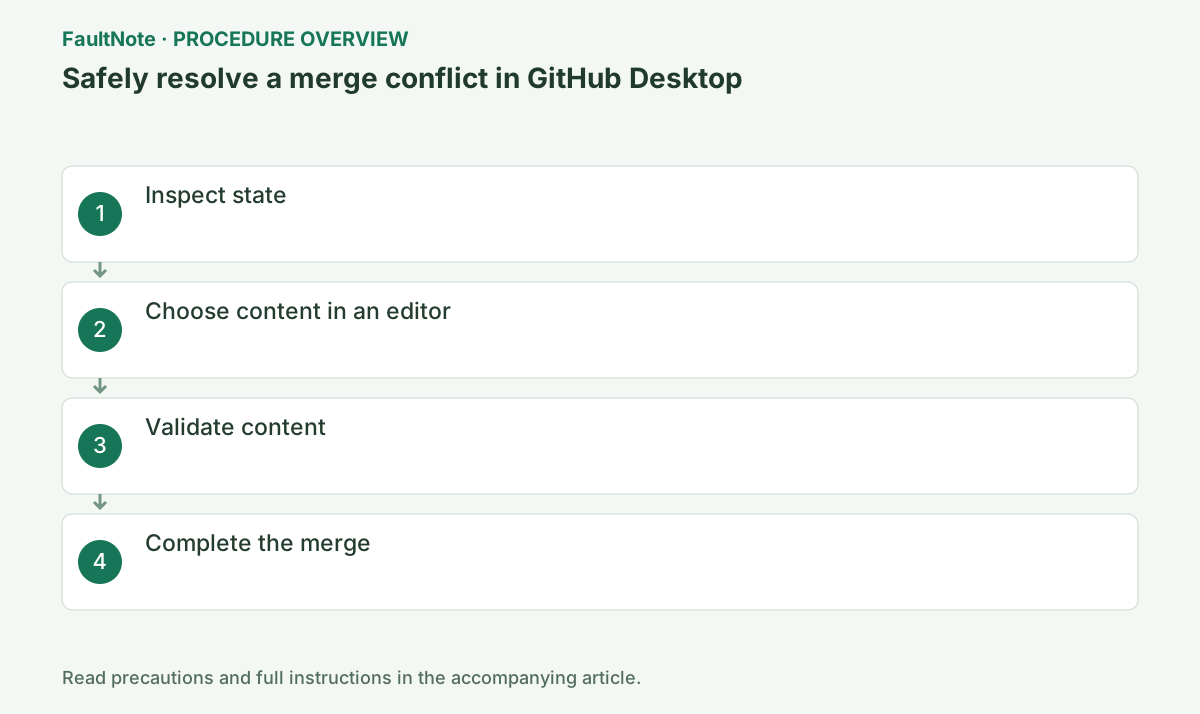
Step-by-step instructions
Confirm Current branch, the merged branch, conflict list, and whether unrelated uncommitted work is present.
Make a separate repository copy first if state is unclear.
Current branch is the merge destination. Read branch names and history before starting so the direction is correct.
Open each file in VS Code or another editor and choose Current, Incoming, both, or a manual result.
Remove every <<<<<<<, =======, and >>>>>>> marker from the final content.
VS Code Accept Both concatenates content. Duplicate functions or keys still require semantic editing after marker removal.
Save, then run syntax checks and relevant tests. Check source files as well as generated artifacts.
For binary conflicts, choose the correct whole version instead of text merging.
A resolved checkbox does not prove valid syntax. Run project tests, lint, and build.
Return to Desktop, ensure every conflict is resolved, and select Continue merge.
Review history and the complete diff for accidental deletions before pushing.
Continue merge creates local history. Review History and the diff before Push so mistakes are not published.
Check the result
- after tests pass, inspect merge parents and Files changed in History
- Check adjacent basic functions for side effects from the change.
If the problem continues
- abort an unclear merge, preserve edits, and rerun with a reviewer
- When continuing with a workaround, preserve original files or account data separately.
Scope of this guide
Troubleshooting guide — Safely resolve a merge conflict in GitHub Desktop by following the official decision path while preserving user data.
Frequently asked questions
Can I abort?
Use Abort merge before completion, but preserve edits made since the merge began.
Is accepting both always safe?
No. It can duplicate or contradict content, so inspect the final file.
Official sources and dates
Source publication or resolution date: Not specified. Sources checked: 2026-09-05. The check date is not the date the problem first occurred. Interface labels can vary between versions and display languages.
Related troubleshooting guides
- Fix GitHub Desktop Authentication failed or Bad credentials
- Fix Acrobat “A running instance has caused an error”
- Fix Firefox “already running” or profile-in-use errors
- Identify the source of Chrome “Managed by your organization”
- Fix OneDrive “Can’t open file” or “Make sure OneDrive is running”
- Fix OneDrive error 0x8007016a